Remington Real Estate

Web · Next.js · Headless WordPress · Jamstack

Web · Next.js · Headless WordPress · Jamstack
A real estate brokerage platform built on Jamstack architecture — Next.js on the frontend with WordPress as a headless CMS, connected through GraphQL. The site allows visitors to browse property listings with advanced filters, explore locations through interactive maps, and view detailed property pages with full image galleries. Content and property data is managed entirely through WordPress by the client's team without developer involvement.
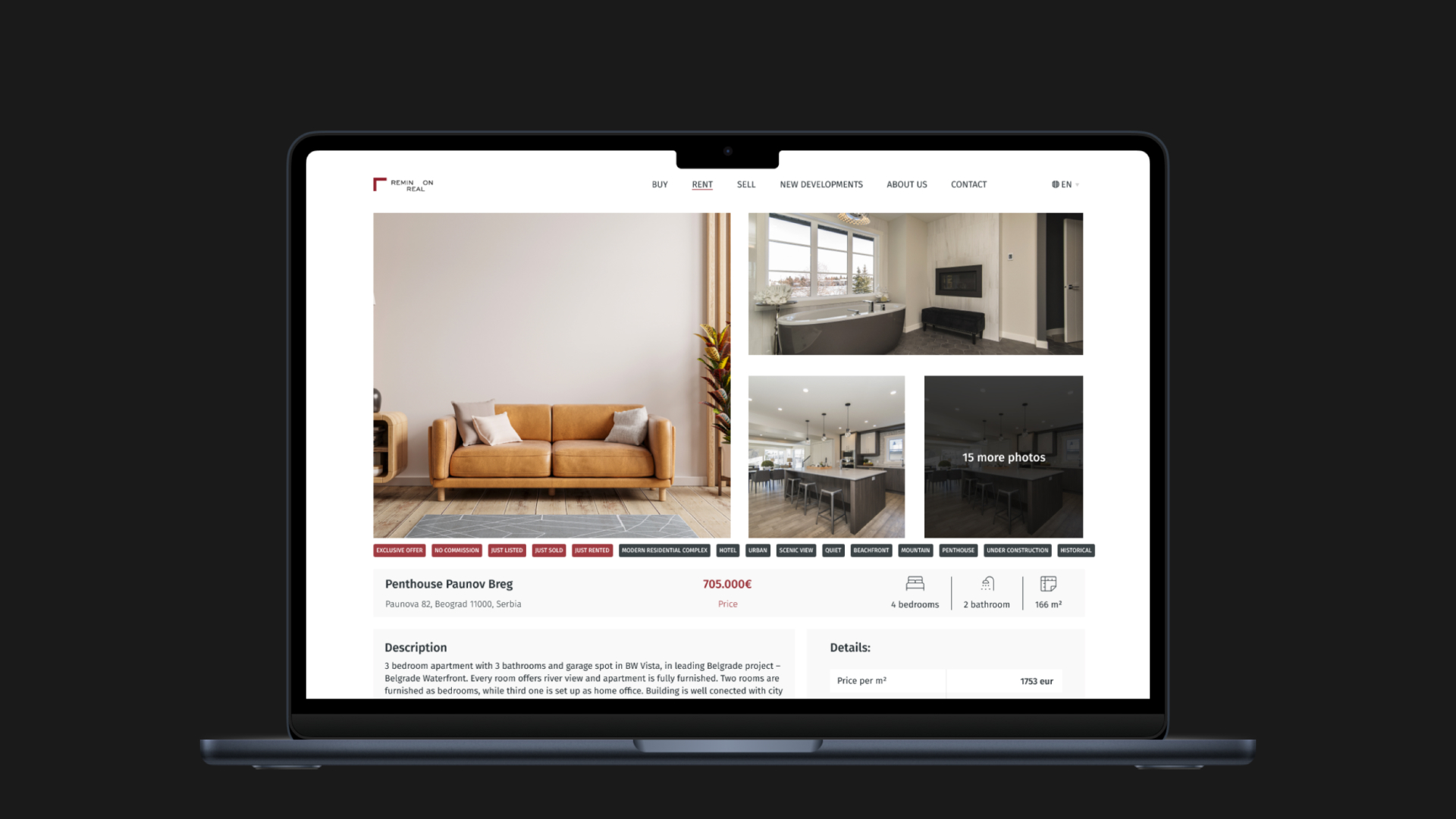
Build a complete real estate platform from scratch using a Jamstack approach — Next.js as the frontend layer, WordPress as a headless CMS for property and content management, and GraphQL as the data layer between them. The site needed to handle SSR, SSG, and ISR depending on the page type, deliver a premium user experience that matches the brand's positioning, and give the client full control over listings and content through WordPress without touching code.
Worked in close collaboration with the design team to implement the complete frontend — every page, every component, from scratch. Used Bootstrap for the grid system underneath, with all visual components custom-built to match the designer's vision. The site includes agency pages, property listing pages with full image galleries, and detailed property views with all relevant information structured for both buyers and agents.
Implemented an interactive map integration where properties are displayed as pins with location data. Built a filtering system that lets users narrow results by location, price range, property type, size, and other criteria. The most demanding part was optimising the GraphQL queries behind the filters — making sure the right combination of filters returned accurate results quickly, without unnecessary data fetching or full page reloads.
WordPress served as the content management layer — the client's team uses WordPress forms to add and manage property listings, upload images, and update site content. All data flows to the Next.js frontend through GraphQL queries, with appropriate rendering strategies per page type: static generation for content pages, server-side rendering for filtered listings, and incremental static regeneration for property detail pages that need to stay current without full rebuilds.